
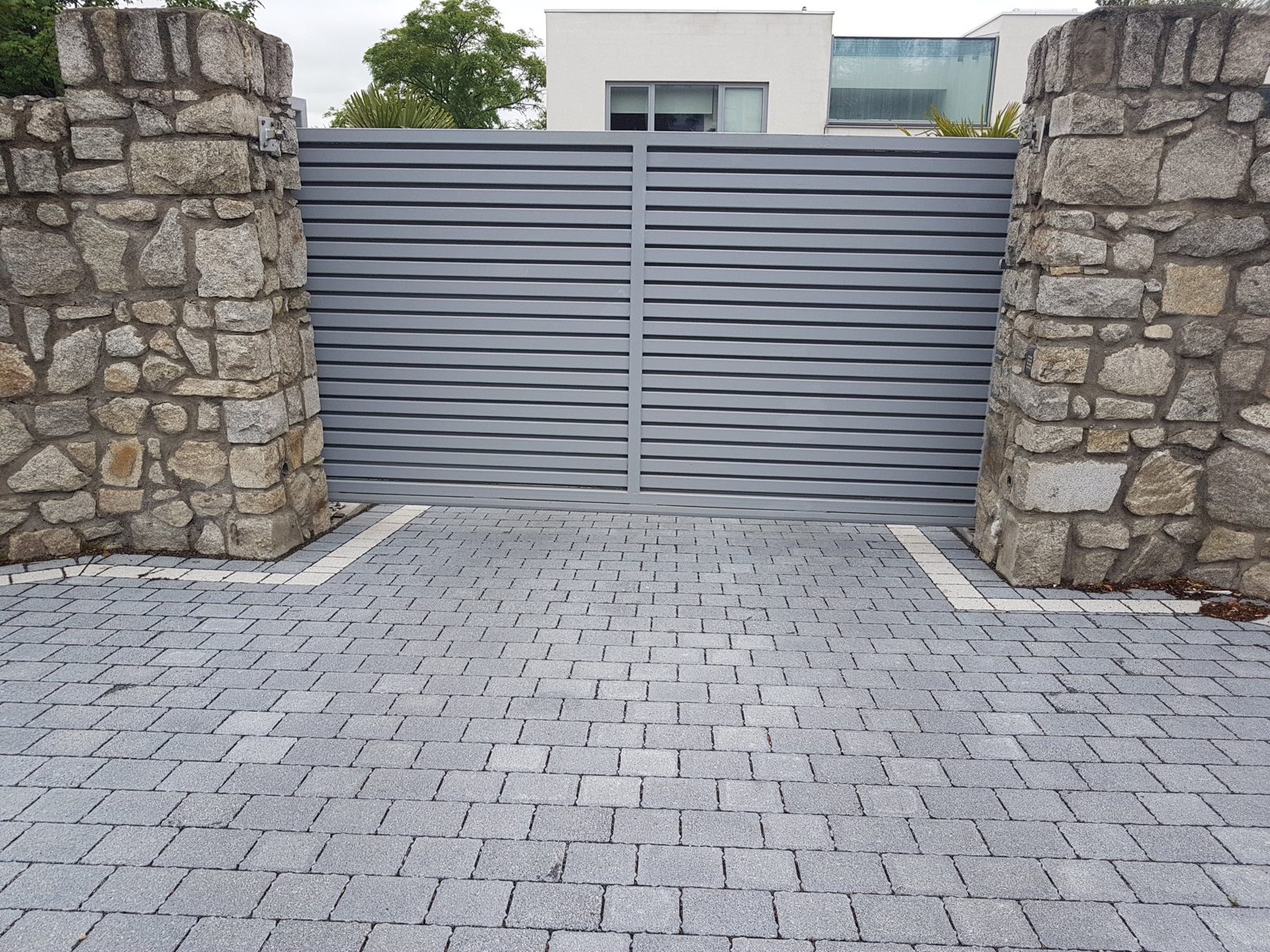
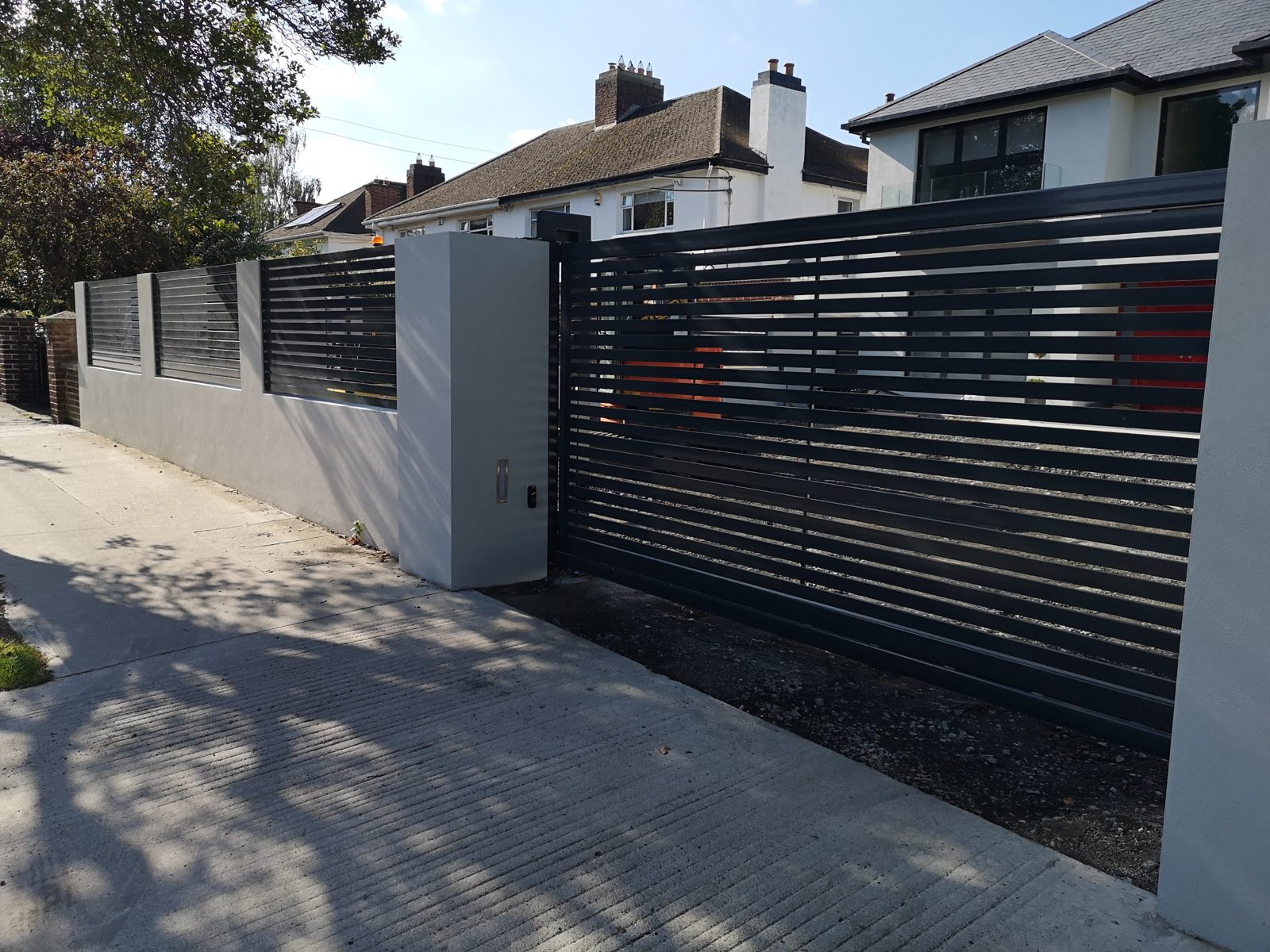
A bit of planning up front saves a lot of hassle – and money – later. Most of the problems I'm called out to fix on other people's installations come down to something that wasn't thought through at the start: weak posts, no drainage, a cable that's too thin, a gate that hits the slope of the drive.
This section covers what to think about before you commit.
The big questions
- What's your budget? See the cost of electric gates – gate automation starts from £1,400 and new gates from £1,600.
- Swing or sliding? It depends on space and slope. See sliding vs swing.
- What material and design? See gate designs.
- Do you need permission? See planning permission for electric gates in Northern Ireland.
- How will people get in? Remotes, keypad, intercom, app. See access control.
- Where's the power coming from? See power supply for electric gates.
The road and the footpath
Think about the space in front of your gate:
- Can a car pull fully off the road while the gate opens? If not, you'll be waiting on the road with traffic behind you. Setting the gate back from the road solves this.
- Which way do the gates open? They shouldn't open out over a public footpath or road.
- Can you see out safely when you're leaving?
Safety from day one
Plan for the safety devices the gate will need – photocells, safety edges, a warning light – and where the cables will run. It's far easier to lay ducts before the driveway goes down. See gate safety and the law.
Use the checklist
I've put everything together in one place: electric driveway gate planning checklist.
Doing other work on the driveway?
If you're getting a new driveway laid, talk to me before it goes down. Laying ducts and foundations first saves digging up a brand-new driveway later.
Call, text or WhatsApp Adrian on 07855 781433 – a site visit and quote are free.
Questions people ask me
How far back from the road should gates be?
Ideally far enough that a car can pull fully off the road while the gate opens.
Should I get the gates fitted before or after a new driveway?
Plan them together. The ducts and foundations should go in before the final surface.
Do I need planning permission?
Often not, but it depends on the height and location. See planning permission.