Our weather is hard on gates. Rain most days, damp that never quite dries out, strong winds, and salt air if you're anywhere near the coast. So when people ask me which gate material lasts longest, the honest answer is: the one that's built and finished properly for Northern Ireland, and looked after.
Here's how the main options compare.
Wrought iron and steel
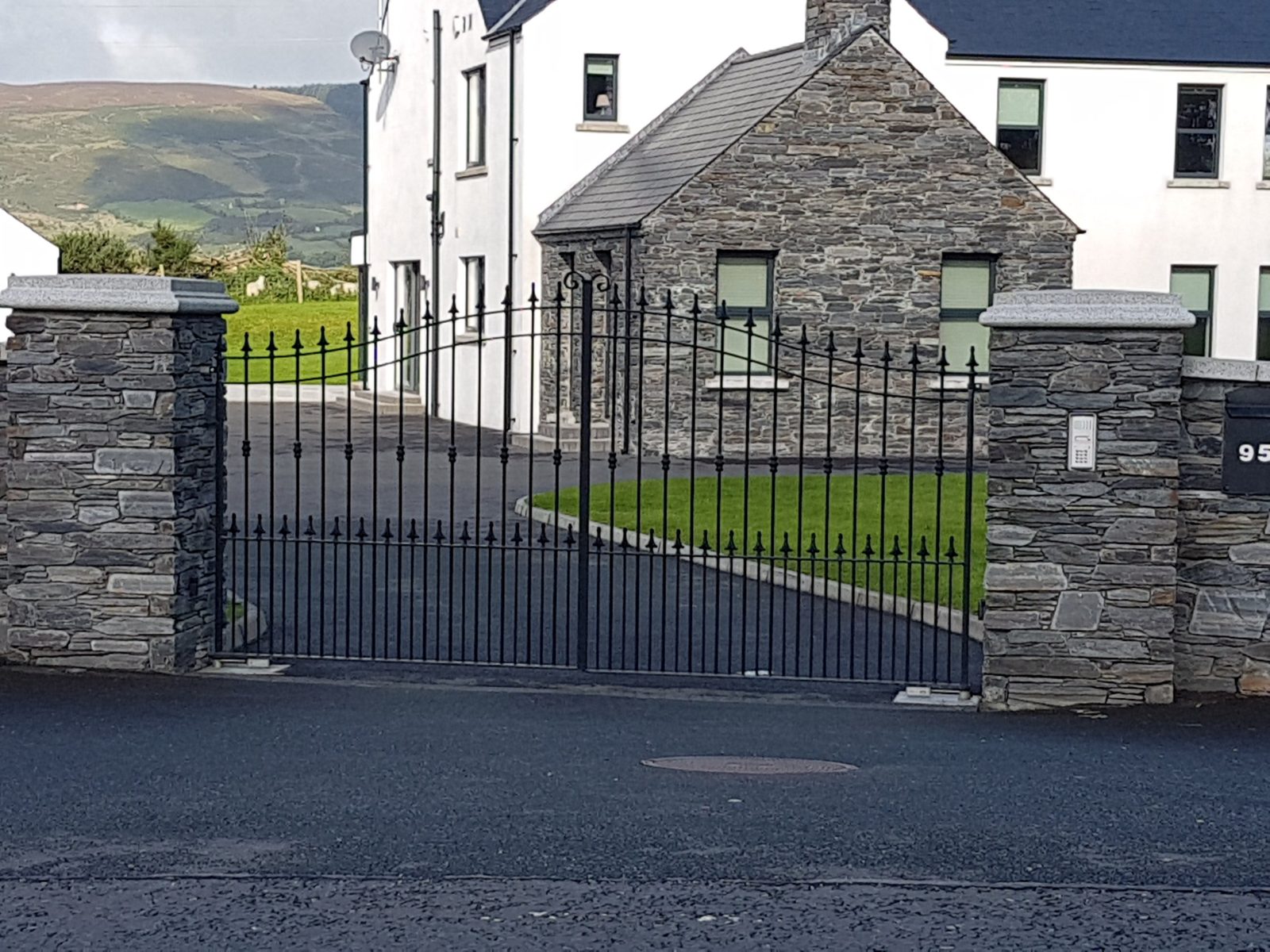
What most people call "wrought iron" today is mild steel, made up in traditional or modern designs. It's strong, secure and looks the part on most homes.
- Durability: excellent, if the steel is galvanised and then powder coated. Paint straight onto bare steel will rust here within a few winters.
- Maintenance: low with a good finish – wash it down, and touch up any chips before rust gets in.
- Weight: heavy, so the automation has to be sized properly.
- Price: my wrought iron gates start from around £2,000.
Aluminium
Aluminium doesn't rust, which makes it a good choice near the sea – think Bangor, Holywood or the Ards shore. It's lighter than steel, so it's easy on the motors.
- Durability: very good, with a powder-coated finish.
- Maintenance: very low.
- Weight: light, but large solid aluminium gates still catch the wind, so the motor and fixings need to allow for that.
Composite
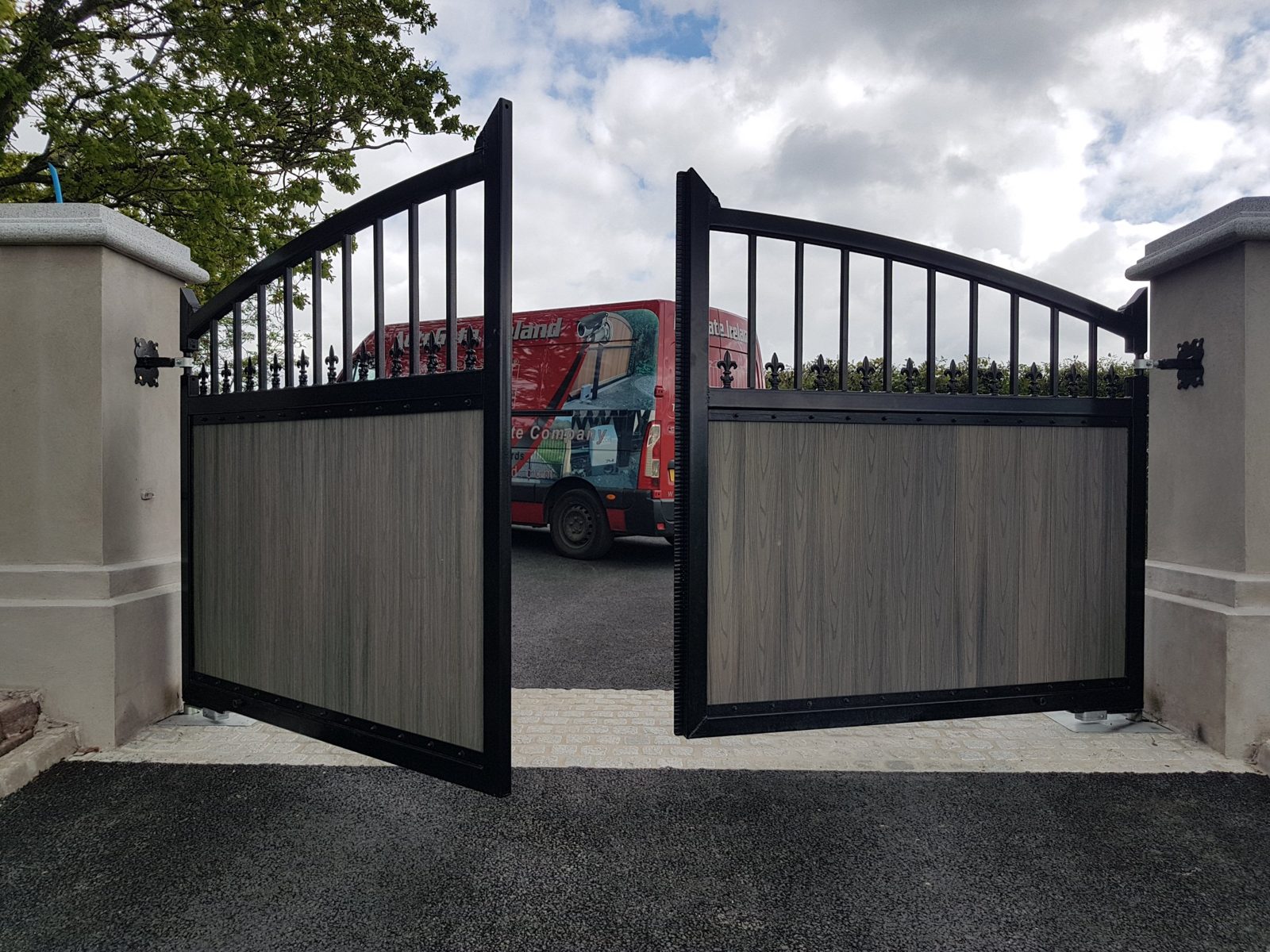
Composite gates use boards made from a wood-and-plastic mix (or similar) on a frame, usually steel or aluminium. You get a timber look without the rot.
- Durability: very good – composite doesn't rot, split or need staining.
- Maintenance: low – just a wash now and again.
- Weight: fairly heavy, and solid infill means more wind load.
- Price: my composite gates start from around £2,200.
Wood
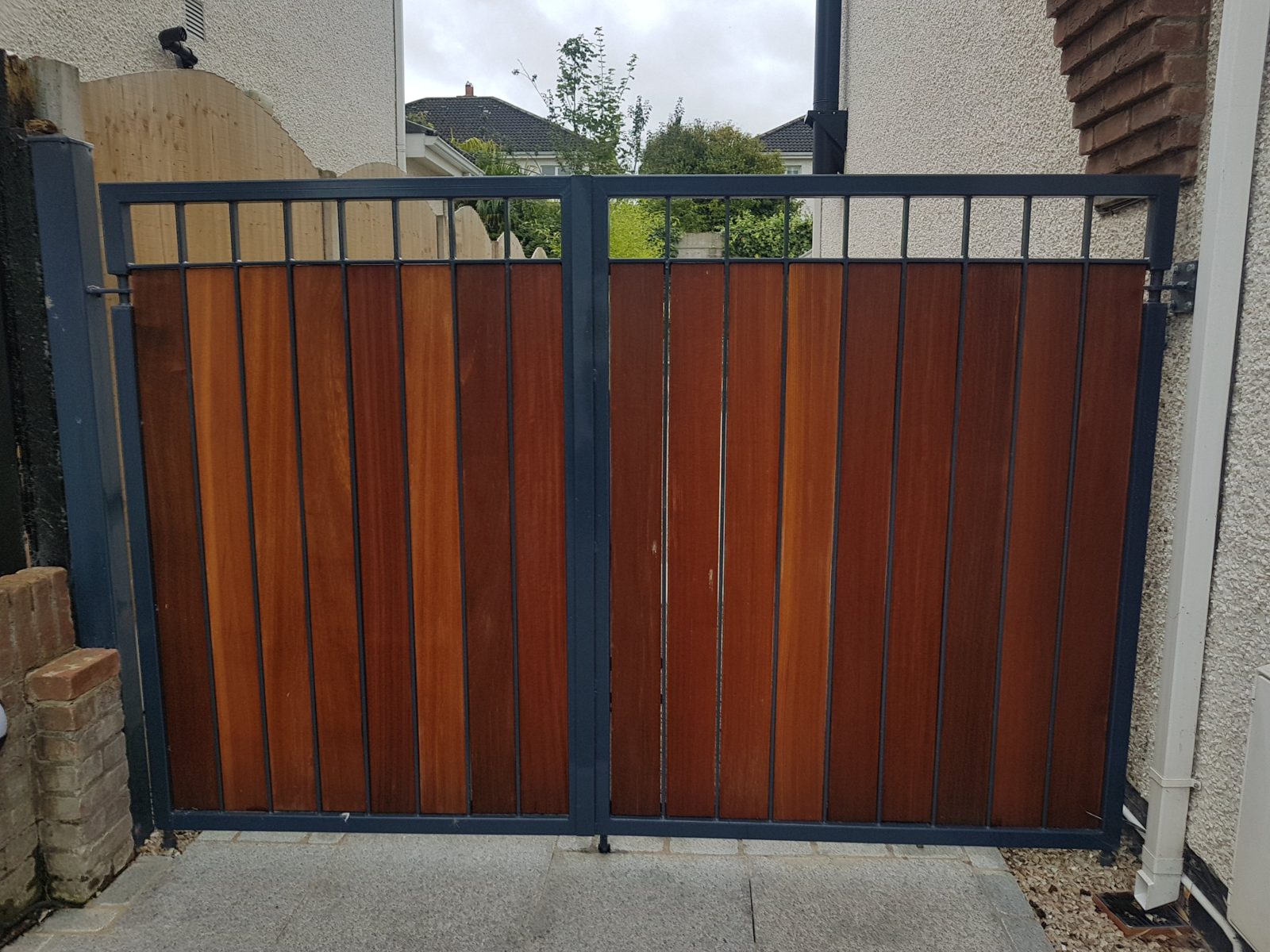
Nothing quite beats a good timber gate for a traditional or country look. But wood is a living material – it swells, shrinks and moves with the weather.
- Durability: good with a quality hardwood or properly treated softwood, built with good joints and a frame that won't sag. Cheap softwood gates often twist, which causes problems for automation.
- Maintenance: medium – it needs oiling or staining every year or two.
- Weight: gets heavier when it's wet, which the motor needs to cope with.
- Price: my wooden gates start from around £1,600.
Side by side
| Material | Durability in NI weather | Maintenance | Weight | Starting price |
|---|---|---|---|---|
| Wrought iron / steel (galvanised + powder coated) | Excellent | Low | Heavy | From £2,000 |
| Aluminium | Very good, best near the sea | Very low | Light | Price on request |
| Composite | Very good | Low | Medium–heavy | From £2,200 |
| Wood | Good, if well built | Medium | Medium, heavier when wet | From £1,600 |
Prices are for the gates and depend on size, design and materials. Automation is extra – see gate costs.
The bits that matter as much as the material
- The finish. Galvanising plus powder coating is what keeps steel gates looking good for years.
- The frame. A gate that sags or twists will give the motor a hard time and wear it out early.
- The hinges and posts. Strong posts set in proper foundations stop the gate dropping over time. Wobbly posts are one of the most common faults I'm called out to.
- Wind. Solid gates act like a sail. On exposed sites I'll size the motor for it, or suggest a design with some gaps.
Not sure which to go for?
Tell me what you like the look of and I'll tell you honestly how it'll stand up at your property. Call, text or WhatsApp Adrian on 07855 781433, or send me a message.
Questions people ask me
What's the lowest maintenance gate material?
Aluminium, closely followed by composite and properly finished steel. Wood needs the most looking after.
Will wrought iron gates rust?
Not if they're galvanised and powder coated, and you touch up any chips. Steel that's only painted will rust.
Are wooden gates OK to automate?
Yes, as long as the gate is well built and doesn't twist. I'll check the gate and hinges before fitting a motor.
What's best near the sea?
Aluminium, or galvanised and powder-coated steel. Salt air finds any weak spot in a finish.